

6 min
Mindset & Strategy
Strategy Meets Speed
As a manager, I always had brilliant strategies. What drives me now: turning them into working prototypes myself – in one evening instead of ten weeks. That's my new superpower.
10 March 2026Read

An honest case study on SEO dominance, automated database crawls and whether a side hustle can genuinely be fun.
Philipp Kendzior
Head of Data, Continental Europe
It started with a lease agreement and a colour called Portimao Blue.
I had ordered my dream car: the BMW i4. Electric, sporty, modern. The estimated delivery date? A few months – absolutely within range, I thought. But then the weeks started slipping by. Weeks became months. Communication with the leasing company? One-way street. “Production delays”, “supply chains”, “we’ll be in touch.”
Do you know that feeling when you check your emails regularly, hoping for a chassis number, and every time you’re disappointed? My old car had already been sold, the wallbox installed – only the car was missing. I felt completely powerless as a customer.
At some point I decided: not like this anymore. I started diving deep into the legal options for delivery delays. I formally notified the provider in writing after the 6-week rule, set a deadline, and ultimately withdrew from the contract. It worked.
But it didn’t stop there.
During my research it became clear: I’m not alone. Thousands are in the same trap. They wait, they hope, they’re frustrated. And there’s not a single site that truly helps them – with real, current delivery times, legal guides and concrete alternatives.
That was the moment the manager in me woke up. Not the frustrated car buyer – but the strategist who sees a market gap.
And then came the question: what if I just build this site?
The idea behind cantwaitformycar.com is as simple as it is effective: whoever has the best data wins the search.
The topic of “car delivery times” is a classic SEO niche. High search volumes, clear user intent (someone has a problem and is looking for an answer), little genuinely good competition. Most sites that rank on Google are generic advice articles without a real data foundation.
My approach was different: I wanted to build a site that doesn’t just write about delivery times, but maps them live – with real data from real sources, updated daily.
That sounds like a massive project. And without AI, it would have been.
Let me be specific, because this is the part that surprises most people:
The heart of the site is a database with over 399 car models from 38 brands. Every model has a stored delivery time – not estimated, but aggregated from real sources: forums like Motor-Talk, manufacturer websites, dealer reports.
The data is automatically updated daily at 06:00. The system crawls the relevant sources, processes the information and rewrites the database – without me needing to be there. This isn’t a manual process, it’s a fully automated data pipeline.
Currently two markets are covered: Germany and the Netherlands. The separation is important – delivery times differ considerably between countries because registration rules, dealer networks and demand vary.
The user selects their brand, then their model – and immediately gets the current delivery time. No form, no newsletter opt-in, no detour. Direct answer to a direct question.
There are also rankings: the fastest delivery times (currently: MG MG5 at 1 month), the longest waiting times (Porsche 911: 12–24 months) and an analysis of which factors extend delivery times the most – engine variant (+2 months), trim level (+1.4 months), paint colour (+1.4 months).
One of the newest features is the EV Finder – an interactive tool that helps users find the right electric car. Not by endlessly scrolling through models, but through targeted questions: how much range do you need? What’s your budget? How quickly should the car be deliverable?
The result is a personal recommendation that combines delivery time, price and suitability. This isn’t a simple filter tool – it’s a real advisor that knows 96+ EV models and delivers the best recommendation in seconds.
Alongside the database there’s an advice blog with 14 articles – all SEO-optimised, all linked to real delivery time data. The topics cover the complete decision-making process:
Alongside the delivery time data there’s an integrated insurance comparison – that’s the affiliate arm of the site. Anyone waiting for a new car will sooner or later need insurance. The comparison is directly integrated into the user journey: natural, not intrusive.
That’s affiliate marketing the way it should work: not as banner spam, but as genuine value at the right moment.
Now comes the part that most people find most interesting: how long did it take?
The honest answer: significantly less than expected. And that’s the point.
I’m not a developer. I can’t write Python, SQL or React off the top of my head. I’m a manager with a marketing background and data expertise. But I know what I want – and I can describe it precisely.
That’s exactly the key to Manus: precise description is the new programming.
The process was iterative:
1. Describe the concept: I explained to Manus what the site should be able to do – not in technical terms, but in business requirements. “I need a database that aggregates delivery times from forums and manufacturer sites daily.”
2. Develop the architecture: Manus proposed the technical architecture, I evaluated and adjusted it. Not as a developer, but as a product owner.
3. Iterate: Feature by feature, session by session. The EV Finder came later, when I realised users don’t just want data, they want recommendations.
4. SEO from the start: The URL structure, meta tags, internal linking – all designed SEO-first. Not as an afterthought, but as the core strategy.
The result is a site that I deployed alone – without a team, without an agency, without a developer. In my spare time. Alongside a full-time job as Head of Data at a corporation.
Three insights I want to share with you:
First: frustration is a business model. The best niche sites emerge from real, personal pain. I was frustrated about waiting for my BMW i4. Thousands of others were too. This shared frustration is the foundation for a community, for SEO traffic and for genuine value.
Second: data superiority beats content volume. I could write 1,000 generic articles about delivery times – or I build a database with 399 models that’s updated daily. The database wins. Always. Because it offers something no human can replicate manually.
Third: rapid prototyping is no longer a developer’s privilege. As a manager, I had ideas for years that stayed in the drawer because the implementation was too complex, too expensive or too time-consuming. With Manus, that’s over. I can test an idea over a weekend. Not perfect, but functional. And that’s enough to see whether the idea holds.
And here it gets interesting for my readers from the corporate world.
What I learned at cantwaitformycar.com is directly transferable to my work at Sodexo:
This isn’t just a hobby. It’s competency building that flows directly into my professional daily life.
The site is live, the database is growing, traffic is increasing. But I’m not done yet.
Next I’m planning:
That’s what Agentic AI means for managers: finally being a maker again.
Did you enjoy this post?
Connect on LinkedIn and join the conversation.
Keep Reading
As a manager, I always had brilliant strategies. What drives me now: turning them into working prototypes myself – in one evening instead of ten weeks. That's my new superpower.

An established food brand, over 10 years of customer data, AI expert bots and a dashboard that would cost hundreds of thousands in a corporation. Built in my spare time. This is the story.
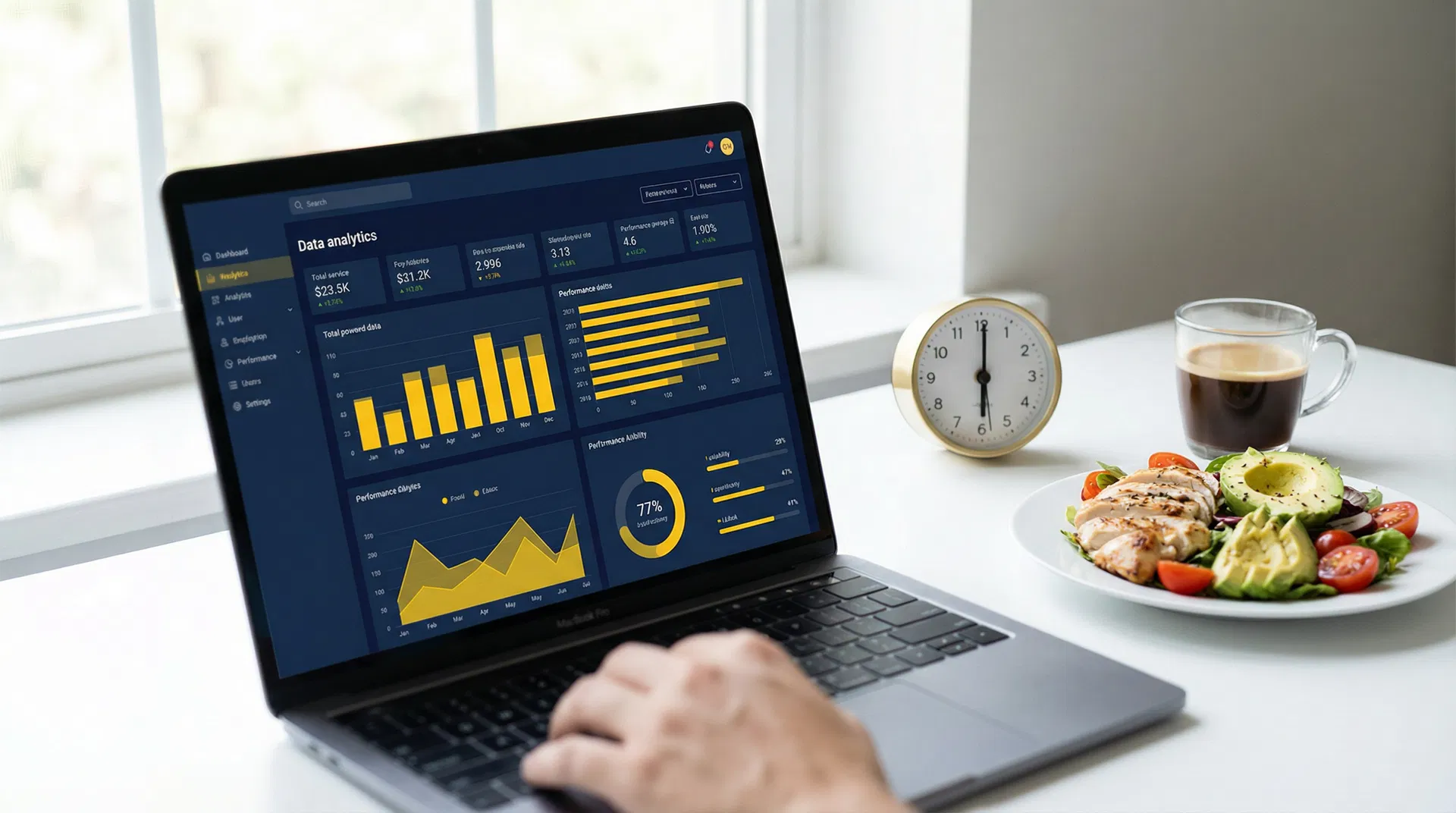
How I built a fully functional AI-Driven Food Data Analytics tool in 30 minutes using simulated FMS data, an external crawl and Manus AI – and what this means for enterprise managers.